Digital Product Passports: Unlocking Opportunities Beyond Compliance

04 Dec 2025
The push toward greater transparency and accountability around the environmental impact of products in the European Union (EU)—and globally—is intensifying, with a focus on enabling the transition to a more circular economy. Companies that fail to adapt to transparency efforts risk significant penalties and reputational damage.
In a landmark case in July 2025, a company was fined €1.1 million under France’s AGEC law (Anti-Waste Law for a Circular Economy) for failing to provide consumers with environmental impact information. This case signals the start of stricter enforcement and foreshadows similar requirements across global markets. For organizations, the message is clear: become transparent now or pay later. Additionally, many companies are now turning to Digital Product Passports (DPPs) as a practical way to stay ahead of these rising expectations, and to strengthen product sustainability, as well as enhance transparency, operational efficiency, and customer trust.
Why Transparency Matters
The transition to a circular economy relies on accurate, accessible product data. Regulators and consumers alike demand visibility into materials, carbon footprints, upcycling, and responsible end-of-life options. A key component to support transparency in a circular economy in the EU is through the use of a DPP.
What Is a Digital Product Passport (DPP)?
A Digital Product Passport, sometimes called a Digital Product Information System, refers to a standardized digital data carrier that tracks product and value chain information from material sourcing to end-of-life. DPPs transfer critical information between parties throughout the value chain, all the way to the consumer. Components of a DPP typically include information on:
- Materials and composition, including their origin and whether they include any restricted substances;
- Durability and upcycling indicators;
- Carbon footprint and other environmental impact metrics;
- Conformity assessments and supporting documentation; and
- Unique identifiers for batches and manufacturers.
Digital Product Passports in the Regulatory Landscape
Within the current regulatory landscape for environmental sustainability, the EU is leading the charge for DPP requirements with its Ecodesign for Sustainable Products Regulation (ESPR), supported by category-specific delegated acts. France’s AGEC law paved the way, and other regions, including China, are reportedly developing similar frameworks.
Other than ESPR, DPP requirements are also in the works for several other standalone EU regulations, including:
- Battery Regulation;
- Construction Products Regulation;
- Toy Safety Regulation;
- Detergents and Surfactants Regulation; and
- End-of-Life Vehicle Regulation.
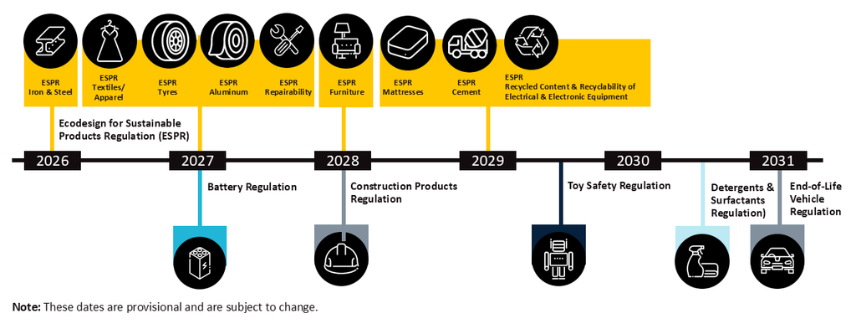
Figure 1 shows the phased introduction and scale-up of DPP-related regulatory obligations, which are subject to change.
Figure 1: Expected Timelines for the Adoption of Digital Product Passports for European Union Regulations
The Efficient Approach to Digital Product Passports
Collecting and verifying all the information for complete and accurate DPPs from a complex value chain can be daunting, but there are ways to streamline that process. Some of the information required for DPP’s should already exist within compliance and quality systems along the value chain, including chemical inventories, supplier declarations, audits, product specifications, and testing results. This is because existing EU regulations often require that this information is generated through various compliance assessments. This information can feed into DPPs, which can then support environmental, social, and governance (ESG) due‑diligence and reporting requirements as shown in Figure 2.
By working with value chain partners to leverage existing information sources, companies can populate DPPs efficiently, gain greater tier-n supplier visibility and control (i.e., visibility into suppliers’ suppliers), develop more circular business models, make verifiable sustainability-related product claims, and feed insights into broader ESG efforts.
Figure 2: Data Flow Between European Union Regulations, Environmental Footprint Analysis, and Digital Product Passports
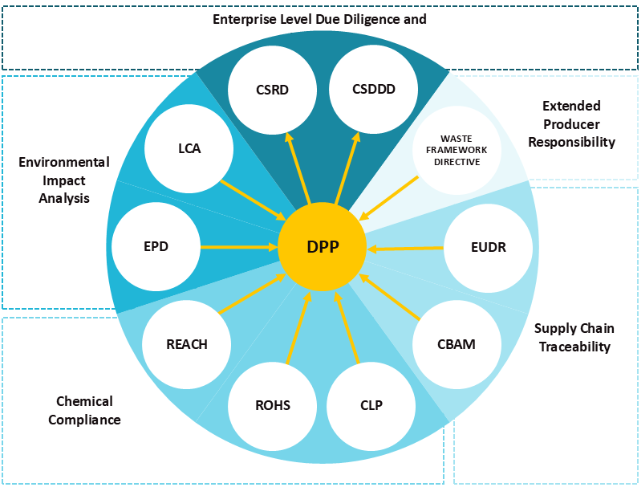
CBAM = Carbon Border Adjustment Mechanism; CLP = Classification, Labelling and Packaging Regulation; CSDDD = Corporate Sustainability Due Diligence Directive; CSRD = Corporate Sustainability Reporting Directive; DPP = Digital Product Passport; EPD = Environmental Product Declaration; EUDR = European Union Regulation on Deforestation-free Products; LCA = Life Cycle Assessment; REACH = Registration, Evaluation, Authorisation and Restriction of Chemicals; RoHS = Restriction of Hazardous Substances.
Companies are encouraged to take the following steps to prepare their value chain partners and internal systems for DPPs:
- Develop a business case that defines scope, impact to business functions and value chain partners, and potential value-add opportunities beyond compliance.
- Conduct a data gap analysis to identify existing compliance data and plan for progressive collection and verification.
- Engage suppliers early, focusing on education, clear and achievable targets, and integration with existing information flows and incentives.
- Integrate with your IT roadmap to ensure digital systems enhance the efficiency and effectiveness of your processes as they develop and mature.
Start small—pilot projects can help validate workflows and build momentum. Over time, a robust DPP system will not only meet compliance requirements but will also unlock commercial value through improved circularity.
Conclusion
DPPs are more than just regulatory requirements; they are strategic levers for innovation, transparency, and competitive advantage. Companies that invest early in developing DPP capabilities in collaboration with their value chain partners will not only meet compliance demands but will also shape the future of a more circular economy.
To know more about our services and how we can help you, visit: