
Securing Connected Safety Alarms: From Cyber Risk to Testable Evidence
26 Oct 2026
Connected Safety Alarms Make Cybersecurity Critical to Product Performance
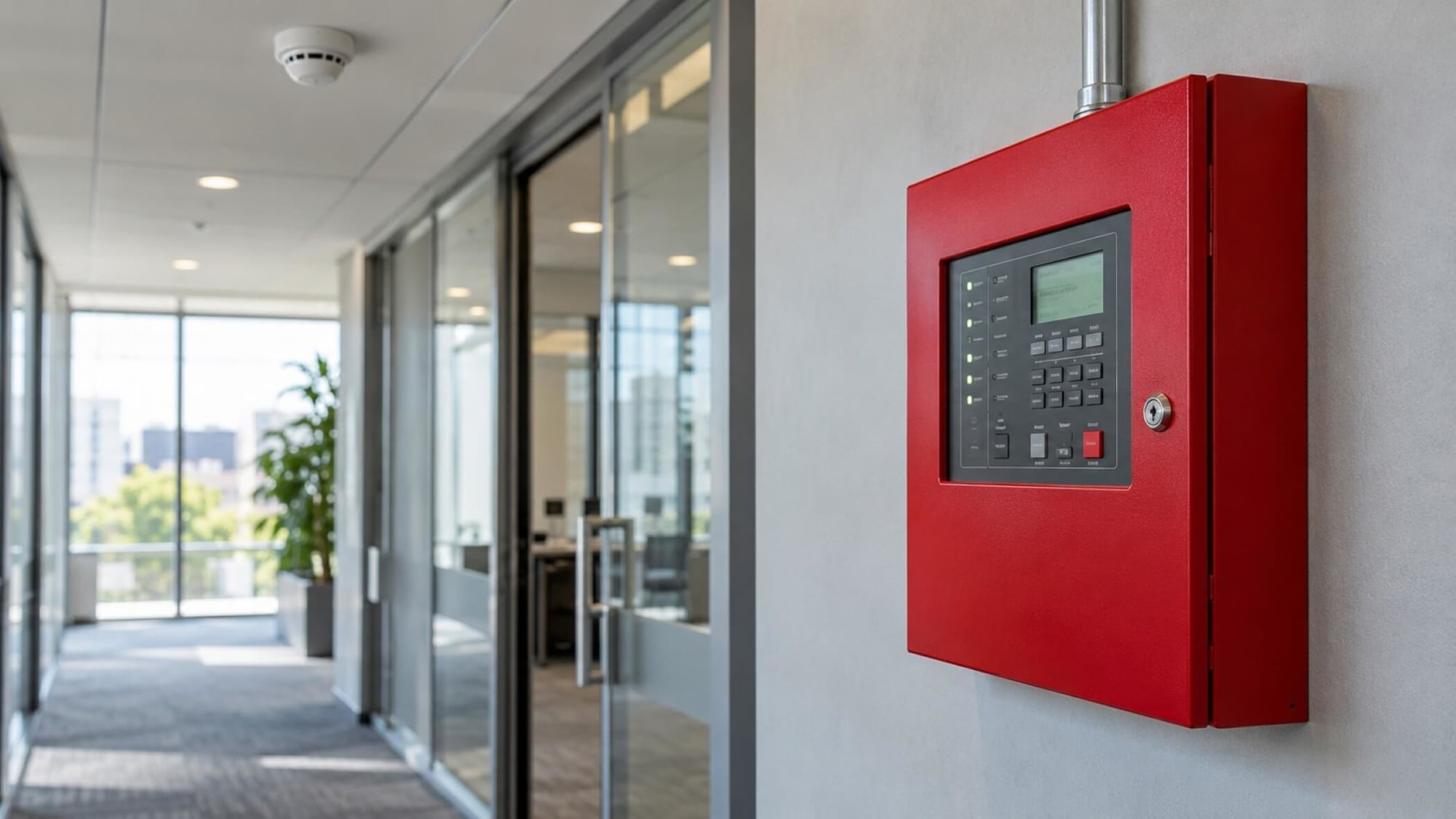
Safety alarms are no longer isolated devices. Fire and smoke detection systems, gas detectors, alarm control panels and connected notification products may now incorporate wireless interfaces, mobile applications, cloud services, remote maintenance functions and integration with wider building-management platforms.
These capabilities can improve monitoring and response, but they also create new attack paths. A compromised account, exposed service, insecure update mechanism or malformed network message could affect availability, suppress or delay an alarm, create repeated false alarms, change configuration or prevent an operator from receiving critical information.
For manufacturers, cybersecurity cannot be treated as only an information-security exercise. In a safety-alarm product, a cyber weakness may influence a safety function. Testing must examine not only whether an attacker can gain access, but also what the product does when communications, software and trust mechanisms fail.
Translating EU Cyber Resilience Act (CRA) Requirements into a Technical Test Strategy
The EU Cyber Resilience Act (CRA), Regulation (EU) 2024/2847, introduces mandatory cybersecurity requirements for products with digital elements placed on the EU market. It also provides a leading global benchmark, broadly aligned with the direction of product-cybersecurity requirements emerging in other markets. The CRA covers product planning, design, development and maintenance, as well as vulnerability handling throughout the support period. Reporting obligations apply from 11th September 2026, with the main obligations applying from 11th December 2027.
For connected safety alarms, an effective assessment starts by defining the product boundary. This may include embedded firmware, radio modules, companion applications, web portals, cloud APIs, update infrastructure and third-party software components. Interfaces that appear secondary such as commissioning ports, diagnostic services or installer credentials can still provide a route to a safety-relevant function.
Threat modelling can then connect credible attack paths to consequences. A test plan may include questions such as:
- Can an unauthorised user silence, reset, isolate or reconfigure an alarm?
- Can a forged sensor message or replayed command create or suppress an alarm state?
- Does loss of cloud connectivity, radio jamming or malformed traffic degrade the local safety function?
- Are installer, administrator and user privileges separated and enforced?
- Can firmware be downgraded, modified or installed without authorised verification?
- Are security-relevant events logged with enough integrity and context to support investigation?
This traceability from asset and threat, through to security control, test case and outcome helps turn broad regulatory language into objective technical evidence.
Testing the Product, its Interfaces and its Failure Modes
Cybersecurity testing should combine complementary methodologies. Architecture and design reviews can identify trust boundaries, shared secrets and single points of failure before laboratory testing begins. Software composition analysis and a software bill of materials (SBOM) help identify known-vulnerable dependencies, while static and dynamic analysis can expose implementation weaknesses.
At the product level, interface enumeration establishes what is actually reachable over Ethernet, Wi-Fi, Bluetooth, cellular, radio and physical debug connections. Authentication, authorisation, session management, cryptographic key storage and secure boot can then be tested against defined misuse cases. Protocol fuzzing and malformed-input testing are particularly useful for alarm gateways and control panels because they assess whether unexpected traffic causes a crash, restart, lock-up or unsafe change of state.
Penetration testing adds an attacker’s perspective, but it should be risk-based and reproducible rather than an open-ended search for vulnerabilities. The test plan should state the product version, configuration, tools, attack assumptions and expected security properties. Findings should be linked to safety impact: a denial-of-service issue affecting a non-critical dashboard is different from one that prevents local annunciation or alarm transmission.
Resilience testing is equally important. The product should be evaluated during loss and restoration of power, network interruption, certificate expiry, radio interference, service overload and failed or interrupted updates. A secure product must not only resist compromise; it should fail predictably, preserve essential local functions where required, recover safely and make degraded operation visible to users or operators.
Security Updates and Vulnerability Handling are Part of the Test Scope
CRA readiness extends beyond the version initially placed on the market. Manufacturers need processes to receive, assess, remediate and disclose vulnerabilities, and to provide security updates during the defined support period. The technical update mechanism therefore deserves the same scrutiny as the product itself.
Testing should confirm that update packages are authenticated, integrity-protected and protected against unauthorised rollback. Interrupted installations should not leave the alarm in an unrecoverable or unsafe condition. The update service, signing keys and release pipeline should also be considered, because a well-secured device can still be compromised through its supply chain.
An SBOM should be treated as an active engineering input rather than a one-time document. Components and vulnerabilities change over time, so manufacturers need a repeatable way to correlate new disclosures with affected product versions, determine exploitability and retest mitigations. Coordinated vulnerability-disclosure procedures and incident-reporting workflows should be exercised before they are needed.
Building Stronger Compliance Evidence
A technically sound CRA programme brings product security, functional safety and compliance teams together early. Existing practices and standards including secure development lifecycle principles, consumer-IoT security guidance and industrial cybersecurity approaches such as IEC 62443 can provide a useful structure. The applicable framework and conformity-assessment route will depend on the product, its intended use and its CRA classification.
For safety alarms, this integrated approach is especially important. Cybersecurity controls must not obstruct emergency operation, while safety behaviour must not create avoidable security bypasses. Testing both disciplines together can reveal interactions that separate assessments may miss.
Advancing Trusted Safety Alarm Technology
As alarm technologies become more connected, trust will depend on more than detection sensitivity and resistance to nuisance alarms. Manufacturers will also need to demonstrate that products withstand realistic cyber threats, remain dependable when supporting services fail and can be maintained securely throughout their lifecycle.
The CRA makes that responsibility explicit, but the technical objective is broader than regulatory compliance. By converting threats and requirements into repeatable tests, manufacturers can reduce uncertainty, improve product resilience and help ensure that connectivity strengthens – rather than compromises – the safety function people rely on.
Intertek can help manufacturers challenge assumptions and build defensible evidence through threat-model review, vulnerability assessment, penetration testing, fuzzing, update-mechanism evaluation, gap analysis and verification of remediation. The strongest test report does more than list tool output: it identifies the evaluated configuration, records repeatable procedures, explains exploitability and impact, and maps results back to defined requirements.

You may be interested in...
Cybersecurity for Life Safety
As a trusted and valued partner in the life safety & security industry, we deliver cutting-edge cybersecurity testing for life safety products and cybersecurity solutions that meet the unique demands of this vital sector, ensure compliance, and safeguard what matters mos