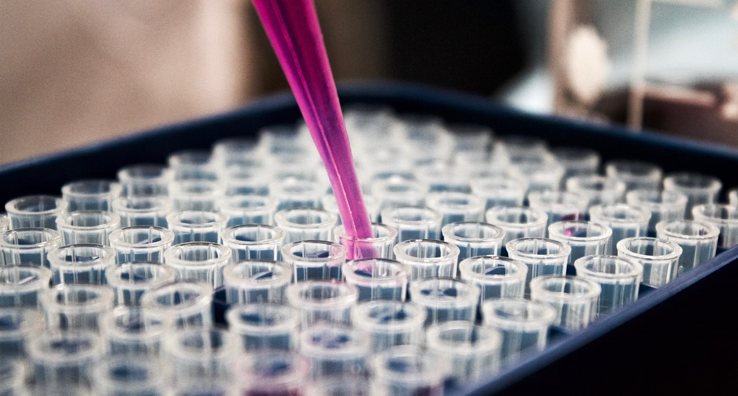
Peptide characterisation and formulation services supporting quality, stability, manufacturability and bioavailability studies in peptide drug development and bioequivalence assessment for generic peptide drugs
Peptide characterisation testing is key to successful peptide drug development. Peptides drugs are experiencing increased industry interest due to advancements in their design and manufacture, with peptides of increasing complexity produced using both chemical and biological processes, with innovative delivery strategies becoming important against a variety of disease targets. Drug products such as glucagon, teriparatide, icatibant, exenatide glatiramer acetate, liraglutide, insulin, leuprolide, somatostatin offer potent, specific, effective, yet safe, medicines.
Peptides are a unique category of biopharmaceutical compound typically with molecular weights of 500-5000 Da. Playing on the strengths of both small molecules and protein therapeutics, they combine the size of small molecules and their ability to bind to cell surface receptors and trigger intracellular effects with high specificity, with a similar mode of action to biologics. However, compared with biologics, therapeutic peptides show less immunogenicity and have lower production costs. This enables peptides to interfere with protein–protein interactions (PPIs) and target or inhibit intracellular molecules. Small molecules struggle with larger binding sites, whereas proteins and antibodies cannot cross over the cell membrane to reach such target sites.
The complexity in characterizing peptides stems from the fact that this class of products can be regarded as conventional chemical molecules, biological entities or biosimilars. The US Food and Drug Administration (FDA) considers all biopolymers composed of 40 or fewer amino acids to be peptides. Within that set, those containing 10 or more are classed as polypeptides. Additionally, developing peptide for therapeutic use has unique scientific challenges consistent with the unique physicochemical properties of peptide molecules which includes their poor in vivo stability. The identification of suitable characterization tools is required to develop peptide formulations with the appropriate properties for a safe and effective therapeutic. A detailed understanding of the structure and physicochemical properties is important to understand quality, stability and consistency across batches.
Peptide Analysis Services
We provide regulatory-driven, phase-appropriate chemical, physicochemical and biophysical analysis in support of CMC programs which include confirmation of the peptide identity, assay, determination of degradation products, and identification of degradation products that grow above the thresholds set in the ICH guidelines. Since peptides might or might not have a defined secondary/tertiary structure we design a custom method for the analysis of each individual product using suitable analytical techniques for characterisation.
Why partner with Intertek as your peptide characterization laboratory?
Experience: Over 30 years of experience serving leading pharmaceutical and biopharmaceutical clients with flexible and high-quality outsourced services
Supporting Quality: Laboratories that are GLP/GCP and cGMP inspected by regulatory authorities, providing services aligned with global regulatory frameworks (FDA, EMA, ICH, OECD GLP, GMP), helping you generate data that supports regulatory submissions (IND/NDA/BLA).
Expertise: Strong peptide analysis technical leadership with project management and regulatory support to advance your drug development program
Optimizing drug delivery efficacy: Expert formulation and drug delivery knowledge including inhaled and nasal drug product development
peptide characterization techniques
Technical Strengths: Our scientists are experienced in method development and validation for advanced analytical technologies including LC-MSMS, NMR, SEC-MALs, DLS and more
End-to-End Capability: We support your peptide product development from early-phase clinical development with peptide bioanalysis (GLP/GCP) through to analytical development including structural and physicochemical analysis, impurities analysis and more. We also support biosimilar / comparability studies and bioequivalence assessments for generic peptide drugs.
Peptide Characterization Techniques
Comparative physiochemical and structural characterization:
Primary sequence confirmation: Peptide mapping approach (LC-MS/MS) covering full sequence confirmation, posttranslational modifications information (if applicable) and confirmation of disulfide (if peptide contacts cysteine)
N-terminal sequence: Edman degradation
Amino acid composition: Amino acid analyzer
Intact mass analysis: MALDI ToF/LCMS/ESI MS
Secondary structure profiling: CD (near, far, and thermal denaturation), FTIR, DSC, XRD
High-order structure: NMR 1D (hydrogen-1 and carbon-13), 2D (TOCSY and NOESY)
Optical purity: GCMS
Impurity Profiling:
Oligomer/aggregation: UV-SEC-MALS, SV-AUC, DLS, SDS-PAGE, CE SDS
Charge variant profiling: iCIEF/IEX
Peptide-related impurity profiling: UPLC/HPLC-HR-MS/MS, RP-HPLC
Biological comparability:
Cell-based assay/immunoassay: Using specific cell line or kits
Bioidentity test: As per monograph, if available
Peptide Identity and Sequence
We apply high performance liquid chromatography (reverse phase, RP; normal phase or hydrophilic interaction liquid chromatography, HILIC) to separate and quantify peptides and related degradation products, whilst ultra-high performance liquid chromatography (UHPLC) can offer improved resolution and sensitivity compared in some cases. We also use ion exchange chromatography, IEC or IEX, capillary electrophoresis, (CE) and size exclusion chromatography, (SEC).
We apply mass spectrometry (LC-MS) to peptide sequence identification which offers sensitivity and the potential to distinguish between isobaric residues. With mass spectrometry analysis of both intact and digested peptides we can confirm sequence identity. By comparing the confirmed sequence to a digested reference standard, we can determine any amino acid modifications, degradation products, and post-translational modifications. Our scientists are experts in selecting suitable digestion strategies and methods which optimise the peptide sequence coverage.
Structural and Biophysical Characterisation
Our biophysical characterization programs for peptides focus on the changes in secondary structure and potential for self-association, which may lead to the formation of irreversible and reversible species in solution. To examine secondary structure, we apply Circular Dichroism (CD), 1D Nuclear Magnetic Resonance (NMR) (1H and C13) and 2D NMR (TOCSY and NOESY) as well as Fourier Transform InfraRed (FTIR) spectroscopy. For tertiary structures and aggregation studies we apply Intrinsic Fluorescence, Dynamic Light Scattering (DLS), SEC-MALS, light obscuration, cryo transmission electron microscopy, analytical microscopy, and SV-AUC. An assessment of stability is assessed by Differential Scanning Calorimetry (DSC) and thermal denaturation by CD.
Peptide Stability
Peptide stability is of particular focus as peptides containing charged residues are hygroscopic and are prone to moisture sorption and exposure to light. Our ICH stability programs integrated testing and storage with photo stability (ICH Q1B Options 1 & 2) and an extensive capacity and a range of conditions. For degradation products in particular we utilise mass spectrometry to look for evidence of enzymatic degradation, formation of self-associating oligomers, deamination proteolysis, glycosylation or oxidation of residues.
Peptide Bioactivity Assays
We also provide bioactivity assays, which probe biological features using in vitro or cell-based assays.
Peptide Formulation Development
Currently, most peptide drugs are administered by the parenteral route as this presents the simplest delivery option for these complex products. Alternative formulations and administration routes are however gaining increasing interest in order to provide targeted delivery, improve patient compliance, and improve product stability – these include inhaled, intranasal, oral, transbuccal, and transdermal delivery routes. Our formulation team apply integrated formulation and analytical programs that support the development of peptide formulations with the appropriate stability, manufacturability and bioavailability. Our team are leaders in product formulation for complex delivery technologies, helping you to ensure an optimised formulation specific to your selected delivery technology.
Total Quality Assurance
With our specialist biologics analysis and formulation development capabilities for complex products such as peptide therapeutics, we can help to accelerate your development process, achieve the right data to complete marketing authorisation submissions and support your post-marketing requirements. Bringing quality and safety to life, we apply our Total Quality Assurance expertise to help you to meet and exceed quality, safety and regulatory standards for your biologic development programs.
Related Links
5th Annual Inhaled & Nasal Biologics | DNA Forum
24-25 September 2026
Cambridge, UK
Join us for a ground-breaking and insightful forum on inhaled and nasal biologics development: Two days of cutting-edge talks and networking opportunities with leaders in this complex area of inhaled medication and inhaled vaccine development.
LEARN MORE & REGISTER
WATCH THE VIDEO - Comprehensive Oligonucleotide Services
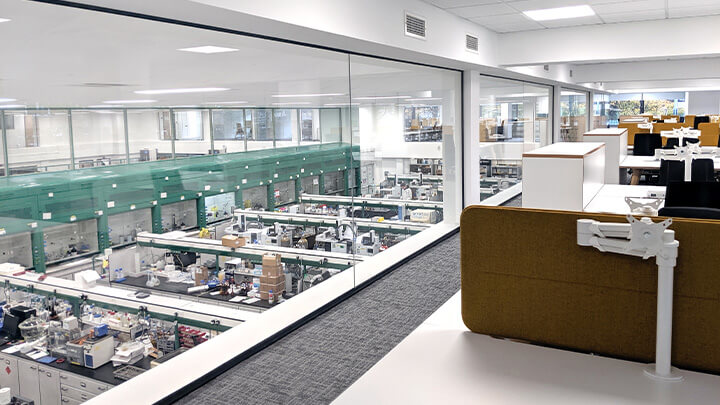
Intertek Pharmaceutical Services Manchester
P.O. Box 42
Hexagon Tower
Blackley
Manchester, M9 8ZS
United Kingdom
For location use: M9 8GQ
Pharmaceutical News & Events
- EVENT - Meet us at BIO-Europe Spring 2026 - Connect now.
- PRESS RELEASE: Expansion of capacity with acquisition of new facility in Melbourn, Cambridge
- PRESS RELEASE: Launch of extractables and leachables services for compliance with new Korean Pharmacopeia requirements
- PRESS RELEASE: Intertek partners with CrystecPharma to advance formulation science and accelerate development for dry powder inhalers
- NEW! Blog: Optimising Quality in Pharma Supply Chains
- Determination of Particles in Pharmaceuticals - Article
- Discover our Audit Live Tool for direct access to our scheduled audits
- Extractables/Leachables Lab Tour - Request access
- Medical Device Extractables & Leachables Studies
- Rapid Determination of Low/Trace Level Benzene in Pharmaceutical Excipients and Finished Products