
New Zealand Mandates Asbestos Testing for Sand-Containing Toys and Crafts
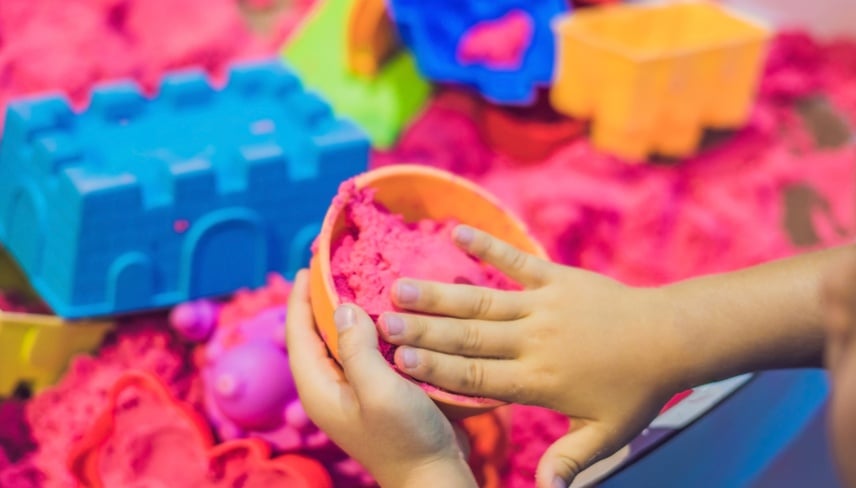
Vol. 1558 | 29 Oct 2026
New Zealand has published the Unsafe Goods (Consumer Sand Products) Notice 2026, requiring asbestos testing and documentation for certain sand-containing toys and craft products from 1 February 2027. Suppliers must use accredited laboratories and hold recent results confirming no asbestos was detected.
The Unsafe Goods (Consumer Sand Products) Notice 2026 was published in the Gazette on 23 October 2026.
From 1 February 2027, toys and craft or decorative goods containing sand cannot be imported into or supplied in New Zealand unless the sand has been tested for asbestos by an accredited laboratory and documented as asbestos-free.
Scope
This Notice applies to two categories of goods:
- Toys that either
- include or contain accessible sand (sand a consumer can directly touch or handle in ordinary use), or
- contain sand inside a flexible plastic, rubber, silicone, gel or elastomeric material, even if the sand cannot be reached.
- Decorative, craft or artistic goods that include or contain accessible sand.
Sand produced by natural geological processes that is intended to fill sand pits, playgrounds, or other recreational areas or board games that do not include or contain accessible sand are not within the scope of this Notice.
Testing requirements
Each product must be tested for asbestos. The analytical requirements are prescriptive:
- Method: transmission electron microscopy, or a combination of scanning electron microscopy with energy-dispersive X-ray analysis.
- Standard: Either one of the following standards
- ISO 22262-2:2026 Air quality - Bulk materials - Part 2: Quantitative determination of asbestos by gravimetric and microscopical methods
- ISO 22262-2:2014 Air quality - Bulk materials - Part 2: Quantitative determination of asbestos by gravimetric and microscopical methods
- ISO 22262-1:2012 Air quality - Bulk materials - Part 1: Sampling and qualitative determination of asbestos in commercial bulk material
- Laboratory: accredited to ISO/IEC 17025:2017 by an accreditation body that is a signatory to the ILAC Mutual Recognition Arrangement.
- Scope: the method used must fall within the laboratory's accreditation scope.
Documentation requirements
A test certificate, test report, test result, or equivalent record is required. The record must:
- be dated no more than 12 months before the goods are imported into, or manufactured in, New Zealand;
- clearly identify the product or product variant it covers;
- identify the testing laboratory;
- specify the analytical method used and the standard applied;
- state the date or date range of testing; and
- state that no asbestos was detected in the samples tested.
If you have any questions, please contact:

Subscribe to Consumer Products Insight Bulletins
Subscribe now to receive the latest regulatory updates on consumer products safety requirements, market trends, and compliance insights directly to your inbox.

Global Market Access (GMA) Knowledge Portal
Gain instant access to real-time compliance information for 180 product types in over 40 different markets with our Global Market Access platform. Unlock essential resources such as regulatory sheets, test plans, recall summaries, and gap analyses with just a few clicks.